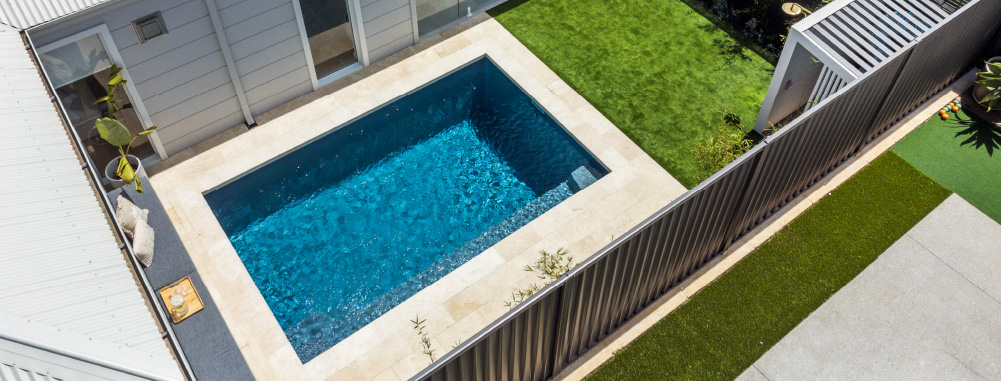
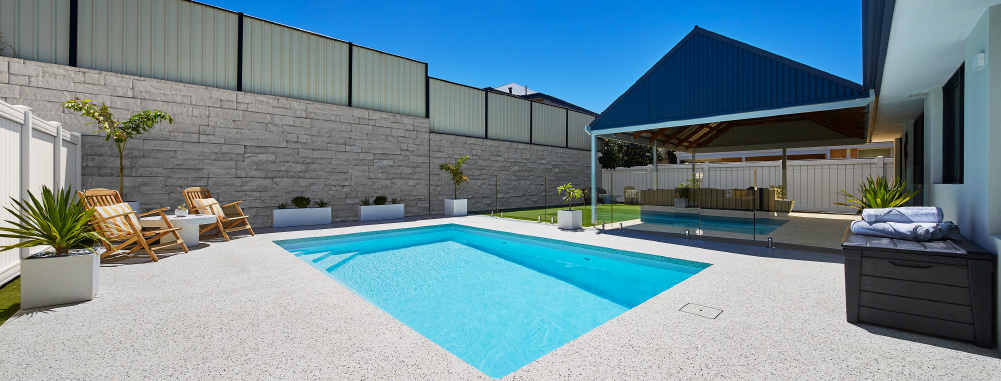
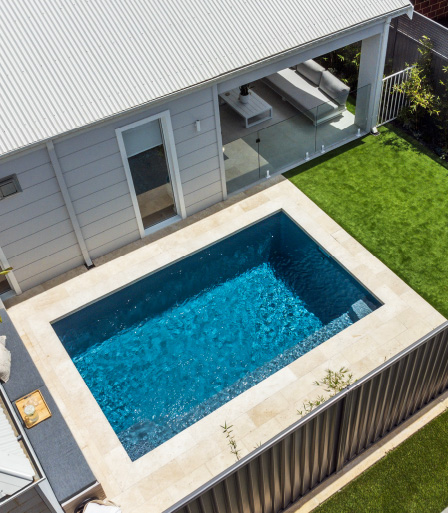
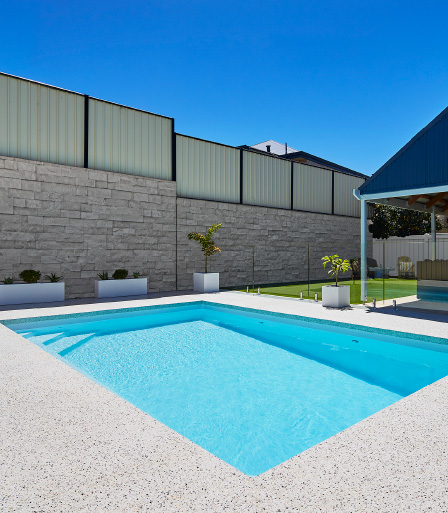
Pool excavation is the precise construction process of preparing the ground for your fibreglass swimming pool. It involves more than just removing soil; it ensures the site is stable, properly drained, and ready for compliant installation.
This article explains how pool excavation works, what can influence timelines and complexity, and why getting this stage right is critical to a smooth installation. By the end, you will have a clear understanding of what to expect and how to plan for a predictable, efficient excavation process.
Key Takeaways
- Pool excavation is a critical stage that directly affects cost, timelines, and pool longevity.
- Site conditions, access, soil type, and water table are major cost drivers.
- Professional contractors ensure safety, compliance, and efficient excavation.
- Proper planning, permits, and soil testing reduce surprises and avoid delays.
- A well-prepared excavation site sets the stage for smooth pool installation.
What Is Pool Excavation?
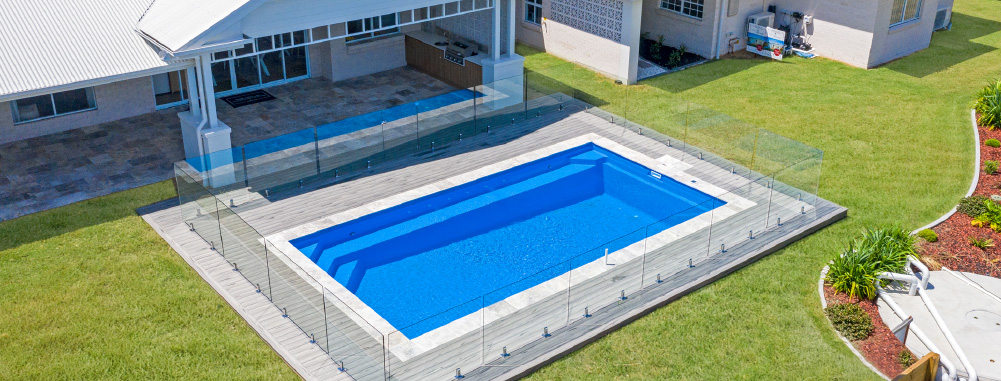
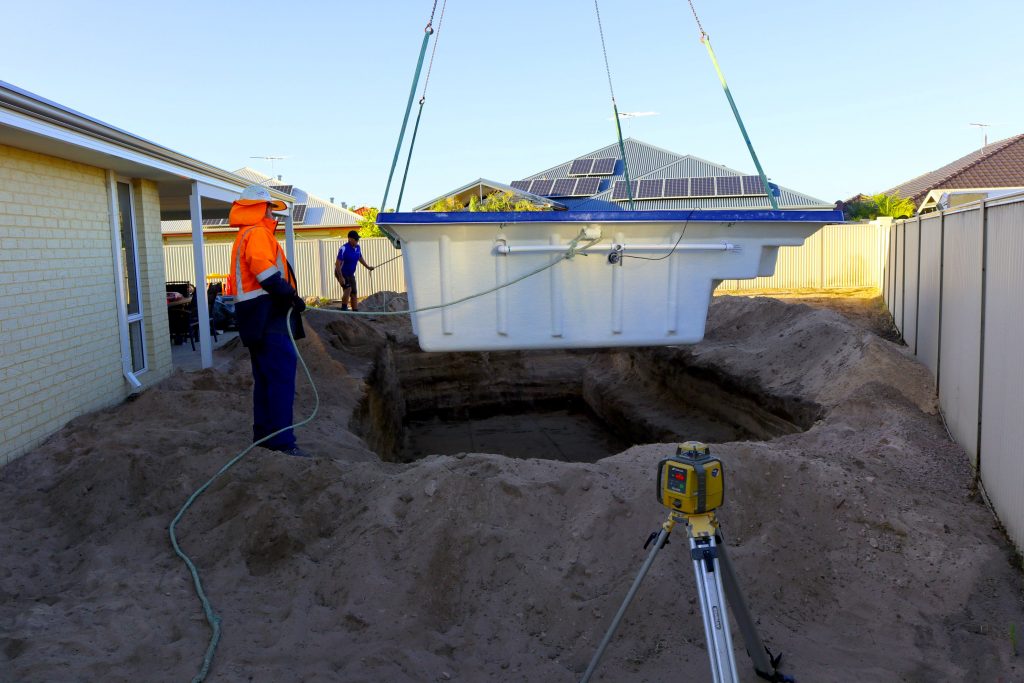
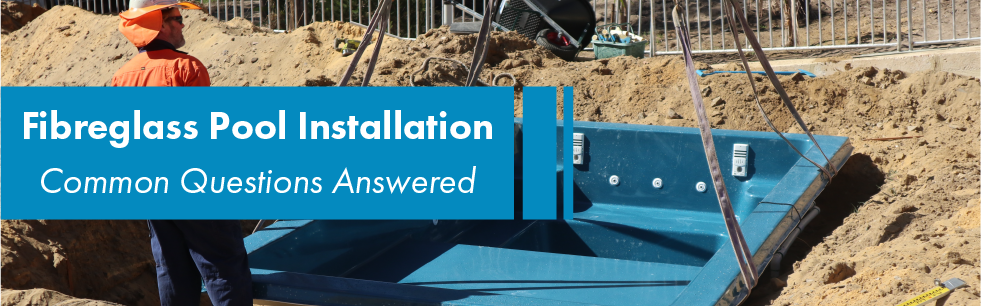
Pool excavation involves more than digging a hole and removing soil. It is the first critical stage of in-ground pool construction and is a controlled process that carefully removes soil, rock, and debris to create an accurately shaped and level space for a fibreglass pool shell.
Using appropriate heavy machinery, excavation is completed to precise dimensions, depth, and layout based on an approved excavation plan, ensuring the pool shell fits exactly as designed.
The process includes:
- Site assessment and layout marking
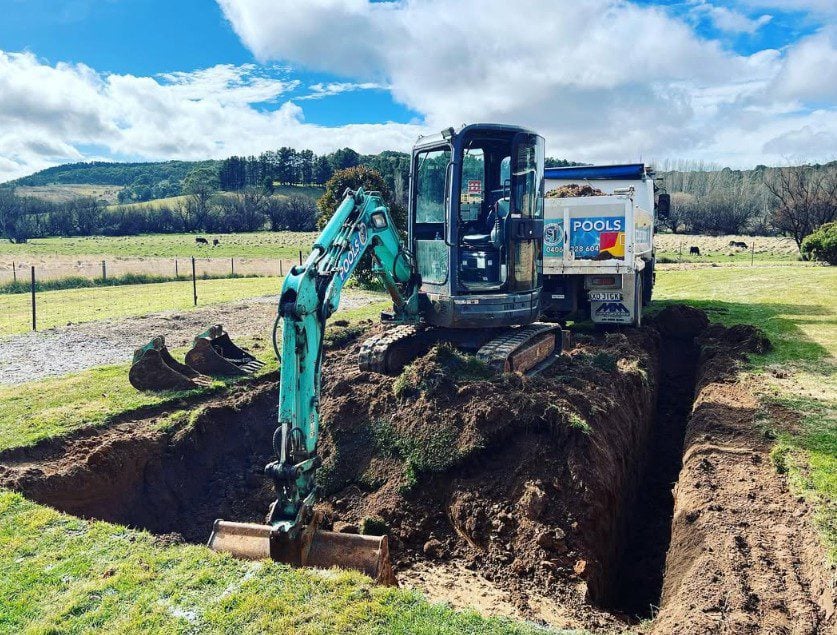
- Digging and shaping the pool cavity
- Managing soil removal
- Site preparation (preparing a stable base for installation)
Accuracy is essential because fibreglass pools are manufactured off-site and must fit the excavation precisely. Poor excavation can lead to misaligned shells, unstable foundations, and costly construction delays.>
Learn more about how excavation fits into the broader fibreglass pool installation process.
How to Dig Out for a Swimming Pool Step by Step
Every pool site is unique, but most excavations follow a consistent workflow. At The Fibreglass Pool Company, we manage each step with precision and safety in mind.
Step One: Site Assessment and Layout Marking
- Clear vegetation and remove topsoil to expose a firm base.
- Level the area using a laser or transit level to create a uniform work surface.
- Stake pool corners and outline edges with chalk or spray paint to establish excavation boundaries.
Step Two: Underground Services Check
- Locate water, sewer, electrical, gas, and communication lines.
- Mark all underground services with colour-coded paint or flags to avoid accidental damage.
Step Three: Excavation and Shaping
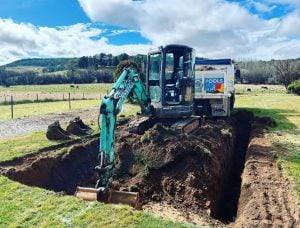
- Use machinery suitable to site conditions: standard excavators for open sites, mini diggers for narrow or restricted areas, and skid steer loaders for confined spaces.
- Shape the hole according to pool design, including steps, ledges, and depth transitions.
Step Four: Spoil Removal or Stockpiling
- Excavated soil is either removed from the site or stockpiled for later reuse.
- On tight access sites, spoil removal can increase labour and transport costs.
Step Five: Base Preparation
- Grade the pool cavity to the specified depth and slope.
- Compact the subgrade using a plate compactor to ensure stability.
- Check levels with laser equipment to confirm accuracy.
Step Six: Dewatering and Drainage
- For high water tables or wet weather, install sump pumps, wellpoint systems, or perimeter drains.
- Proper water management prevents site instability and delays.
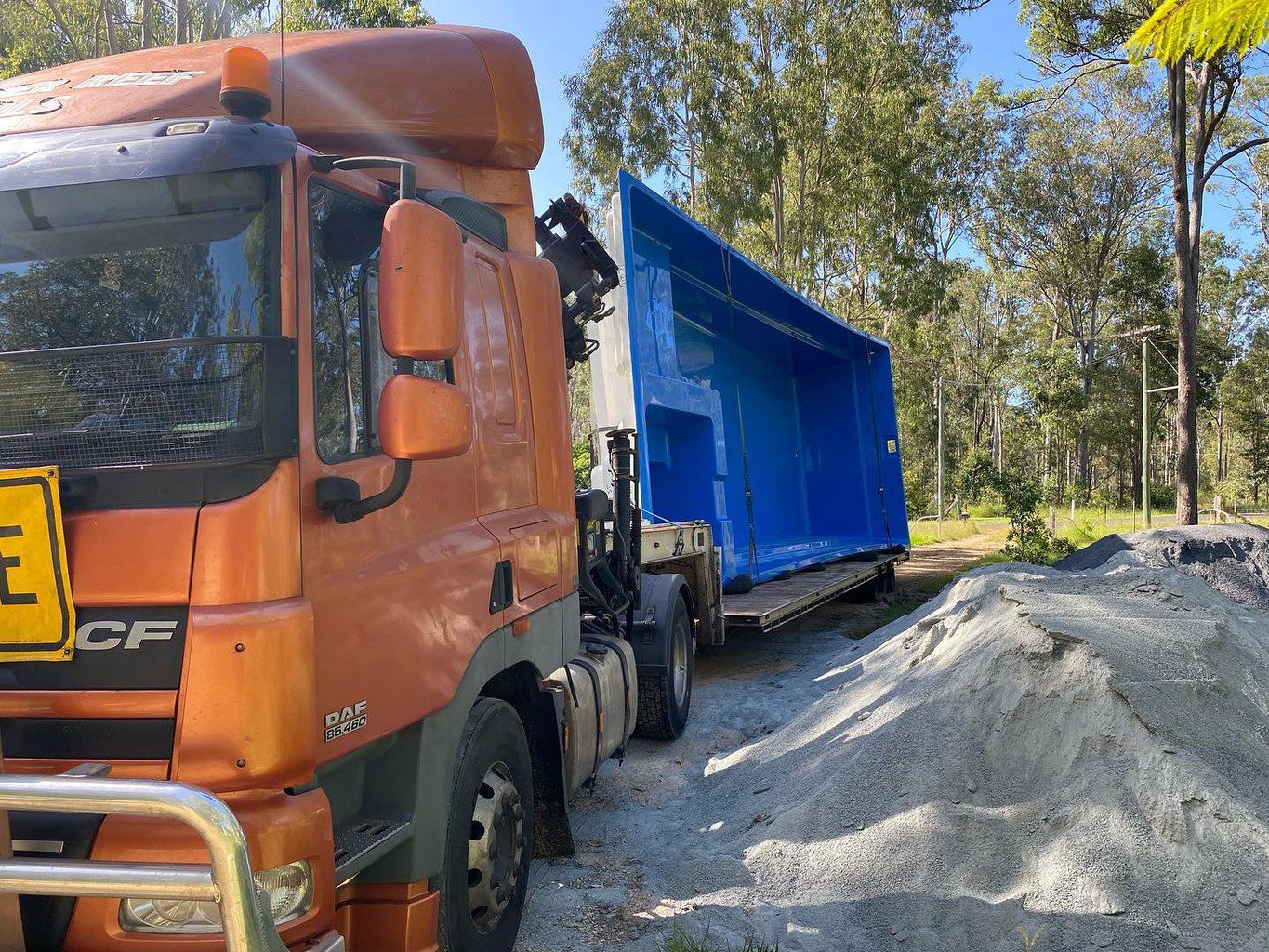
Step Seven: Ready for Pool Delivery and Installation
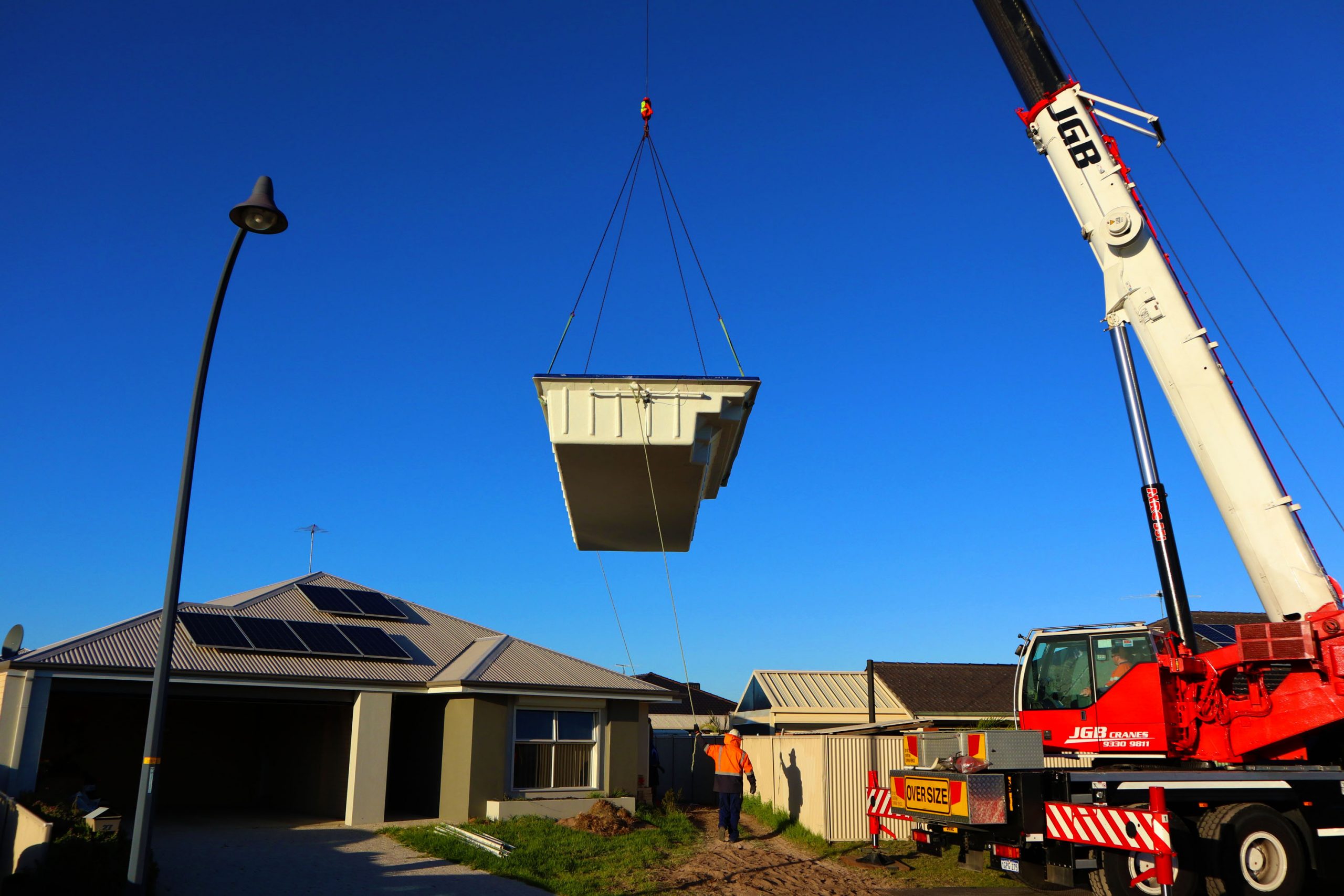
- Once excavation and base preparation are complete, the site is ready for pool delivery and installation.
What Affects Pool Excavation Cost?
Pool excavation is not a one-size-fits-all process. The time, equipment, and expertise required can vary significantly depending on site conditions and pool design.
Key factors that influence excavation complexity and cost include:
Ground Conditions
Soil type and stability play a major role in how easily an area can be excavated. Soft soils are generally straightforward, while clay, reactive ground, or rock can require specialised equipment and more controlled excavation methods.
Site Access
Access determines the size of machinery that can be used and how efficiently material can be removed. Restricted access may require smaller equipment or additional manual work.
Block Slope and Ground Levels
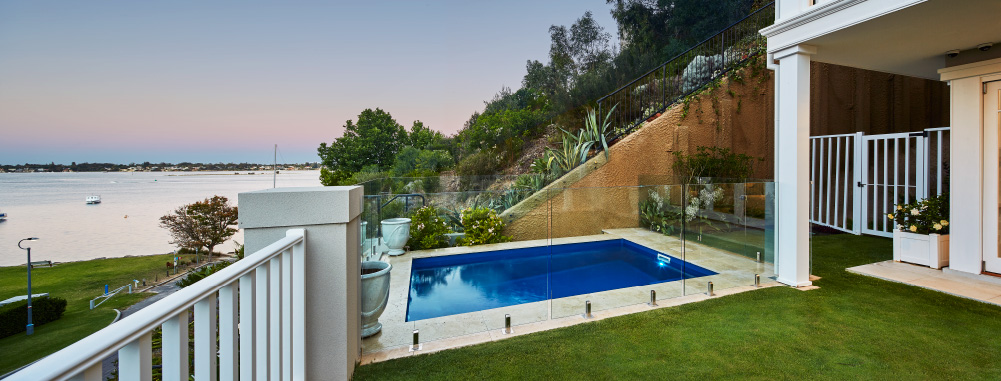
Sloping or uneven sites often require stepped excavation or retaining solutions to create a stable, level base for the pool. Read more about fibreglass pools on a sloping block.
Spoil Volume and Removal Logistics
The amount of material removed and the ease of transporting it off-site can affect excavation planning, particularly on smaller or built-up properties.
Pool Size and Shape
Larger pools require greater accuracy, additional digging, and more time on site to achieve precise dimensions.
Because every property is different, excavation requirements are best assessed through an on-site inspection.
Pool Removal vs Excavation When Replacing an Old Pool
Replacing an existing pool involves a different scope of work than excavating for a new pool on a clear site.
Pool removal typically includes demolishing the existing structure, removing and disposing of materials, and rebuilding a stable base before new excavation begins. This process must be carefully managed to ensure the ground is suitable for the new pool installation.
Additional considerations when replacing a pool may include:
- The construction type of the existing pool
- Structural impacts on surrounding areas
- Engineering requirements for backfilling and compaction
- Council approvals, inspections, and compliance processes
- Coordination of access, lifting equipment, or traffic management if required
Understanding the difference between excavation and removal helps homeowners plan appropriately and avoid unexpected challenges during a pool replacement project.
Common Pool Excavation Mistakes to Avoid
Even small errors during excavation can lead to costly delays, safety hazards, and long-term issues with your pool. Understanding the most common mistakes helps homeowners and pool builders plan effectively. Here’s what to look out for:
- Failing to plan machinery access
- Ignoring drainage or groundwater management
- Underestimating spoil removal
- Rushing set out and level checks
- Skipping site assessments on challenging blocks
Safety and Environmental Considerations
Safety is a critical part of any pool excavation project. In unstable soil conditions, trench walls must be properly shored to prevent collapse, while sloped excavations should be benched to safe angles based on the specific soil type.
Daily trench inspections are essential to identify potential hazards as conditions change throughout the excavation process.
Environmental responsibility is also an important consideration during excavation. Best practices include reusing soil where possible, implementing erosion-control measures, and managing water responsibly to prevent runoff and site damage. These practices help protect the surrounding environment, ensure compliance with local regulations, and minimise unnecessary waste.

Planning Your Excavation
Pool excavation transforms raw earth into the foundation of your dream pool. With proper planning, accurate site assessment, professional machinery, and safety protocols, excavation can be predictable and efficient.
At The Fibreglass Pool Company, we manage excavation as part of a complete fibreglass pool installation process, ensuring your project stays on track, compliant, and ready for a beautiful, long-lasting pool. Request a site assessment or quote to start planning your pool today.
Frequently Asked Questions About Pool Excavations
How do you dig out for a swimming pool?
A pool is excavated by marking out the site, checking underground services, digging with suitable machinery, removing spoil, and preparing a stable, level base.
What affects pool excavation cost the most?
Site access, soil type, rock, slope, water table, spoil removal, and pool size or complexity.
How long does pool excavation take?
Fibreglass pool excavation often takes one day, but complex sites with rock or drainage issues can take longer.
What is the most expensive part of building a pool?
Major cost drivers include the pool shell, site works including excavation, fencing, landscaping, and optional upgrades like heating or automation.
Is it worth removing a pool?
Consider maintenance costs, safety, resale potential, and whether renovation or replacement offers better value. Feel free to contact our pool builders for professional advice.
What is the difference between a standard dig and a mini dig?
A standard dig uses larger machinery for open access sites and is faster, while a mini dig is used for narrow or restricted sites and requires more labour.
Why is soil testing important before excavation?
A soil test determines soil type, bearing capacity, and drainage, guiding equipment choice, excavation technique, and cost estimation.
How is groundwater managed during excavation?
Dewatering pumps, sump systems, and perimeter drains maintain stability and prevent delays in wet conditions.
How is rock removed during excavation?
Hydraulic breakers, rock saws, or manual splitting are used depending on hardness and site access.