
Until a few years ago, concrete was the construction material of choice when it came to in-ground swimming pools. However, the times are changing and even though concrete still edges out all other popular construction materials for in-ground pools, fibreglass is not too far behind. While critics continue to point out how fibreglass is not very customization-friendly, the fact is that after considering every factor that determines the longevity and safety of a swimming pool, fibreglass clearly stands way ahead of concrete and vinyl liners.
In this post, we’ll take a look at what colour options you can pick from when finalizing the purchase of a fibreglass pool, but first, let’s talk about why investing in fibreglass pools is such a great idea!

Key takeaways
- Fibreglass pools come in a wide array of colours, often grouped into lighter and darker tones.
- Your pool colour can look different depending on sky reflection, depth, lighting, surrounds, materials and viewing angle.
- Light colours can feel bright and “beachy”, help pool lighting stand out, and often suit warm climates — but can show debris more easily and create glare.
- Dark colours can create a reflective “mirror” effect, hide debris better, and may warm water in cooler climates — but pool lights may feel less pronounced.
- Your pool surround should contrast the pool colour for the best overall look (light pool + darker surrounds; dark pool + lighter surrounds).
- Pool colour is a long-term decision — choose something that suits your home now and any future outdoor upgrades.
Why fibreglass is a great choice (quick context)
Before diving into colour selection, it helps to understand why so many homeowners choose fibreglass in the first place:
Easy installation
Concrete pool installation can take months depending on size and shape. Fibreglass pools are delivered in a finished state, which typically allows installation to be completed much faster.
Low maintenance
Concrete surfaces can become a breeding ground for microorganisms and may require more intensive cleaning. Fibreglass surfaces are smooth with rounded corners, which makes them easier to clean and maintain.
Compatible with salt chlorine generators
Many pool owners use salt chlorine generators to help maintain chlorine levels. Fibreglass is compatible with salt systems, making ongoing sanitation easier to manage.
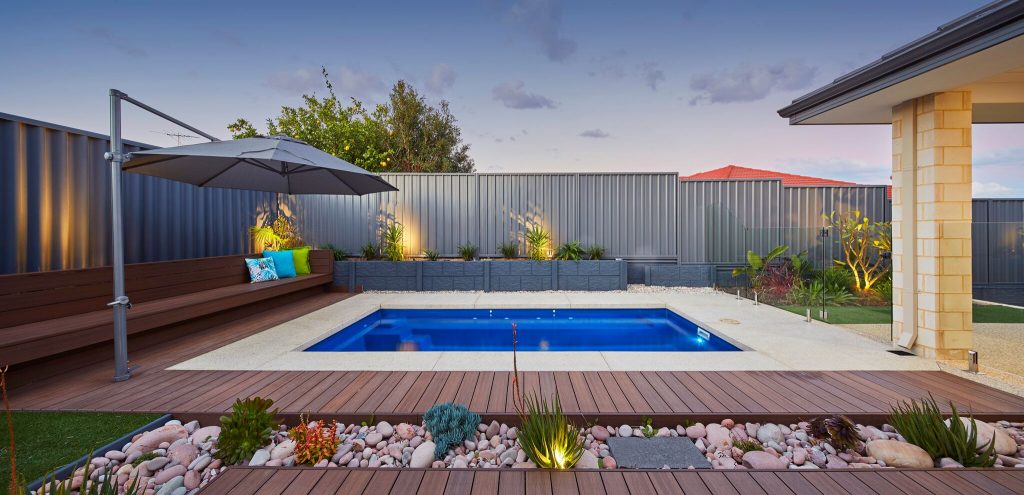
What colours can fibreglass pools be?
Fibreglass pool colours often include classic blues (light, mid and dark), as well as modern neutrals like whites, sands, greys and darker tones.
A key thing to remember: what you think you’re choosing on a swatch can look very different once water is in the pool. For example, lighter finishes like Alpine White can look bright and crystal-clear, while a colour like Sandstone Shimmer can create a warmer “sun-kissed beach” feel. Darker options (e.g. Midnight Shimmer) can appear deep and tranquil once filled.
What affects how your pool colour actually looks?
Even with the same fibreglass finish, the “final” look is influenced by multiple elements, including:
- Reflections from the colour of the sky
- How deep the water is
- Weather and time of day
- Height/colour of landscaping
- Deck/surround material and colour
- Your viewing angle
- Pool lighting (in-water and surrounding)
- Nearby buildings and their colour/height
This is why two pools with the “same” colour can look noticeably different in different backyards.
Choosing the right colour: light vs dark
Many colour decisions come down to whether you prefer a lighter, brighter look or a darker, moodier look.
Light pool colours
Light colours are ideal when your pool will be surrounded by darker features (dark timber decking, sandstone with earthy tones, or richer paving materials). They’re often chosen to emulate a beach/oasis style environment.
Benefits of light colours
- Often better suited to hot climates because lighter colours reflect more sunlight and may help keep water cooler.
- Can make LED pool lighting feel more pronounced at night.
- Can create a brighter, more open, “resort-style” visual.
Trade-offs
- Light colours can make the floor and walls more visible, so debris/dirt may be easier to notice (which can mean more frequent cleaning).
- Higher potential for glare in bright sun.

Dark pool colours
Dark colours can look striking, but they work best when the surrounding environment is lighter (ivory/natural sandstone, lighter decking, beige/cream paving).
Benefits of dark colours
- Often preferred in cooler climates because darker colours absorb sunlight and can raise water temperature by a couple of degrees depending on intensity.
- Can hide settled debris better by keeping the pool floor less visible.
- Can create a reflective “mirror-like” effect that emphasises landscaping and surrounds.
Trade-offs
- If you live in a hot area, choosing a dark colour can lead to water feeling uncomfortably warm.
- LED lighting may not stand out as strongly as it does in lighter finishes.
Match the pool colour to your surrounds (contrast matters)
A simple design rule: aim for contrast between pool and surrounds.
- Light pool colour → pair with darker surrounds (dark timber decking, bluestone, dark granite, earthy sandstone, dark brick, slate/limestone).
- Dark pool colour → pair with lighter surrounds (light decking, light granite, natural/ivory sandstone, light brick, slate/limestone).
Think long-term: you can’t easily change pool colour later
Once installed, the colour of your fibreglass pool is essentially locked in unless you replace the pool (which is not a practical option). Choose a colour that won’t feel outdated and consider any future landscaping or renovation plans that could clash with your current choice.
Size considerations (and the “illusion” of space)
If you have a smaller pool, lighter colours can help create the illusion of space and make the pool feel larger. If you’re aiming for a deeper reflection-style look in a small pool or spa, darker colours can also look excellent — especially when paired with the right surrounds.
Pool finish durability: Advanced Colour Technology
The Fibreglass Pool Company uses Advanced Colour Technology designed to be fade, weather and chemical resistant, and notes a lifetime internal surface guarantee across the range. This gelcoat/resin technology is described as similar to coatings used in industries like automotive, marine and aviation for interior surface performance.
Need help choosing?
If you’re unsure, the team can help you match a pool colour to your home style, climate and landscaping plans, and guide you through the available pool range and finishes.
Frequently Asked Questions
What colours can fibreglass pools be?
Fibreglass pools come in a wide range of colours, commonly including classic blues plus lighter and darker modern tones. The final look can shift once water is added and depends on lighting and surrounds.
Why does my pool colour look different at different times of day?
Pool colour changes with sky reflection, depth, weather, time of day, viewing angle, lighting and surrounding materials/landscaping.
Are light coloured fibreglass pools harder to keep looking clean?
They can be, because lighter colours make the pool floor and walls more visible—so settled debris can be easier to notice.
Do dark pool colours make the water warmer?
They can. Darker colours absorb more sunlight and may increase water temperature by around 2–3 degrees depending on intensity and conditions.
What pool surrounds work best with light vs dark pool colours?
Light pool colours usually look best with darker surrounds, while dark pool colours usually suit lighter surrounds to create contrast.
Can you change the colour of a fibreglass pool later?
Not easily. The colour is not designed to be changed after installation, so it’s worth choosing something that suits your home long-term.