
When people research swimming pools, they tend to focus on shape, size, and price. The interior finish rarely gets the same attention, which is a mistake. The finish determines how your pool looks every day, how much work it takes to maintain, and whether you’ll be spending money on it again soon.
This article explains how pool finishes work, what concrete pool owners deal with over time, and why a fibreglass pool with a quality gelcoat surface sidesteps most of those issues from day one.
Key Takeaways
- A pool's interior finish affects water colour, surface feel, maintenance requirements, and long-term ownership costs.
- Concrete pools require a separate applied finish: plaster, quartz, pebble, tile, or paint. Each has its own lifespan, texture, and resurfacing cycle.
- Every applied concrete finish will eventually need replacing. Some need it within 7 years; even the best last around 25.
- Fibreglass pools are different. The gelcoat is the interior surface, built into the shell. There is no separate finish to apply, maintain, or resurface.
- The Fibreglass Pool Company's gelcoat uses the same technology found in cars, boats, and aircraft: engineered for UV resistance, chemical resistance, and long-term gloss retention.
- With 11 Sparkle colour options, a fibreglass pool gives you complete control over water appearance without any of the ongoing finish maintenance that comes with concrete.
- For new pool buyers, choosing fibreglass effectively removes the finish problem entirely.
What Is a Pool Finish, and Why Does It Matter?
A pool finish is the surface that lines the inside of the pool shell. It is what gives the water its colour, what you feel underfoot, and what your hand runs along the wall.
The finish shapes the entire ownership experience:
- Water appearance: the colour, clarity, and tone of the water is largely determined by what’s beneath it. A pale surface produces tropical-looking turquoise water; a dark charcoal gelcoat creates a deep, dramatic effect.
- Feel underfoot: smooth gelcoat, textured pebblecrete, and hard tile are very different surfaces to walk on, particularly for children.
- Maintenance demands: porous surfaces absorb chemicals, harbour algae, and stain more readily than non-porous ones. The finish you choose determines how often you’re cleaning and how much chemical management the pool needs.
- Long-term cost: some finishes last 7–10 years before needing replacement; others last 25. The gap in total ownership cost over two decades is significant.
Concrete pool owners choose a finish at installation, then choose again every time it wears out. Fibreglass pool owners choose a colour once
What Finish Options Do Concrete Pool Owners Have?
Concrete pools need an applied interior finish. Without one, raw concrete is rough, porous, and difficult to keep clean. The following are the main options used in Australia, along with what each one involves over time.
Plaster and Render
White cement plaster is the traditional concrete pool finish and still the most affordable. It gives a clean white or off-white look when first applied, and it is what produces the classic blue-white pool aesthetic many people associate with older pools.
The problem is durability. Plaster is porous, which means it absorbs water, chemicals, minerals, and algae over time. Within a few years, it begins to discolour, roughen, and degrade. Most plaster finishes need resurfacing within 7–12 years, and the pool requires more chemical management throughout because the surface is constantly absorbing rather than repelling.
Quartz Finishes
Quartz finishes, sometimes sold under brand names like Quartzon, blend white cement with quartz aggregate to produce a harder surface than plain plaster. They are a genuine improvement: less porous, more stain-resistant, and longer-lasting, typically 12–18 years before resurfacing is needed.
They still require resurfacing eventually, and they still demand ongoing chemical management. The quartz surface is harder to damage, but the underlying dynamic is the same: a porous applied layer that slowly absorbs water, chemicals, and staining.
Pebblecrete and Exposed Aggregate
Pebblecrete and exposed aggregate finishes are among the most popular in Australia because they are genuinely durable. A well-maintained pebble finish can last 15–25 years. The aggregate is set into a cement base and exposed during curing, creating a hard, dense surface.
The trade-off is texture. Coarser pebblecrete finishes can be rough underfoot, which is a real consideration for families with young children who spend a lot of time on the pool floor and steps. Grout lines between pebbles also trap debris and need regular brushing. Glass bead blends offer a smoother and more polished version of the same concept, at a higher price.
Tile Finishes
Full tile interiors represent the premium end of concrete pool finishing. Individual ceramic or glass mosaic tiles are laid across the entire pool surface, grout-filled, and sealed. The result is visually striking and, if grout is properly maintained, can last 25 years or more.
It is also the most expensive finish option by a considerable margin, and the grout is a permanent maintenance commitment. Algae and staining accumulate in grout lines, and individual tile or grout repairs over the decades add up.
Pool Paint
Epoxy and acrylic pool paints are coatings applied directly over the concrete surface. They are the cheapest upfront option and the shortest-lived, typically 3–7 years for epoxy and less for acrylic. Paint does not remove or address the underlying surface. It covers it.
Repeated recoating creates compatibility problems between layers, and paint applied over old paint will eventually delaminate. A previously painted pool can also limit future resurfacing options because some applied finishes will not bond properly over old paint. Most pool professionals treat paint as a stopgap rather than a long-term solution.
Here is a summary of how the concrete finish options compare:
Finish | Lifespan | Maintenance | Key Watch-out |
Plaster/render | 7–12 years | High — porous surface needs more chemicals and frequent cleaning | Discolours and roughens over time; the shortest lifespan of all options |
Quartz / Quartzon | 12–18 years | Moderate — harder than plaster but still requires periodic resurfacing | Better than plaster but still needs replacing; ongoing chemical management |
Pebblecrete / aggregate | 15–25 years | Low to moderate — tough surface, but grout lines trap debris | Texture can be rough underfoot, particularly for children |
Glass bead blend | 15–20 years | Low to moderate — smoother than pebble, grout lines still present | Premium cost; still requires eventual resurfacing |
Full tile | 25+ years | Low surface cleaning, but grout requires ongoing maintenance | Most expensive option; grout degrades and needs attention over time |
Epoxy / acrylic paint | 3–7 years | High — needs recoating more frequently than any other finish | Repeated layers cause compatibility issues; they limit future resurfacing options |
The Resurfacing Cycle: What Concrete Pool Owners Need to Plan For
Every applied concrete finish has a lifespan, and when it expires, the pool needs to be drained, the surface prepared, and a new finish applied. For concrete pool owners, this is a recurring cost throughout the pool’s lifespan.
What Resurfacing Involves
Resurfacing means removing or preparing the existing finish and applying a new one. It is not the same as painting, which simply coats over whatever is already there. A proper resurface addresses the surface condition, carries out any necessary repairs, and applies a fresh finish layer. The pool is typically out of action during this process.
What Drives the Cost
Resurfacing costs vary considerably across Australia and shift with material costs, labour rates, and regional demand. The key cost drivers are:
Finish Type
Plaster sits at the budget end; quartz in the middle; pebble, glass bead, and tile at the premium end. Labour intensity varies significantly between them and that is reflected in the price.
Pool Size
More surface area means more material and more hours on site.
Surface Condition
Cracking, delamination, or old paint layers require additional preparation before a new finish can be applied. This is often where quoted prices differ most between contractors.
Site Access
Tight backyards, equipment that needs moving, or restricted access all increase the cost of the job.
Scope
Many homeowners replace waterline tiles or attend to coping at the same time, which adds to the total but makes sense while contractors are already on site.
Location
Labour rates differ between states and between metro and regional areas.
When comparing quotes, always confirm what surface preparation is included, what finish system is being applied, and what warranty covers the work. A lower quote that skips proper prep rarely saves money over time.
Paint as a Short-Term Option
Pool paint applies a coating over the existing surface without removing it. It costs less upfront but needs repeating every 3–7 years, and repeated paint layers can create compatibility issues that complicate future resurfacing.
Paint vs Resurface: Quick Decision Guide
Consider paint if:
- You’re selling within 1–2 years
- The surface is structurally sound
- Budget is the primary constraint
- You accept it is a short-term fix
Choose resurfacing if:
- The pool is rough, stained, or leaking
- You are staying long term
- You want a result that lasts 10–20+ years
- You want the option to change colour or texture
Common mistakes to avoid with pool paint:
- Applying paint over a dirty, flaking, or chemically contaminated surface: it will fail early
- Mixing epoxy and acrylic products without proper bonding agents: a reliable way to cause peeling
- Not allowing adequate curing time: most systems need at least 5–7 days before the pool can be refilled
- Using paint to cover structural problems: it will not fix delamination, cracks, or leaks
Why Fibreglass Pools Are Different
A fibreglass pool does not have an applied interior finish. The gelcoat is the outermost layer of the fibreglass shell itself, smooth, non-porous, and manufactured as part of the pool. There is no separate finish to apply, no resurfacing cycle to plan for, and no porous surface slowly absorbing chemicals and algae.
The full construction detail is covered on the pool construction layers page, but in summary, the gelcoat is the first of seven engineered layers, each contributing to the structural integrity and longevity of the pool.
The Gelcoat Surface
The Fibreglass Pool Company sources its gelcoat from a global ISO 9001 certified manufacturer supplying the pool industry for over 20 years. This is the same gelcoat and resin technology used in cars, boats, planes, and bridges, engineered for superior UV weathering, chemical resistance to chlorine and acid, and the highest available resistance to osmotic blistering, with long-term gloss retention.
Because the colour is integral to the gelcoat rather than applied on top, it does not peel or flake. The surface stays consistent throughout the life of the pool.
For more on what affects fibreglass pool lifespan, see How Long Do Fibreglass Pools Last?
Maintenance Advantages
Because the gelcoat is non-porous, algae and staining find much less purchase than they do on any applied concrete finish. The surface does not absorb chemicals the way plaster or even quartz does, which means water chemistry is easier to maintain and typically requires less chemical intervention. For most fibreglass pool owners, day-to-day maintenance is simply easier.
Common questions about what fibreglass maintenance actually involves are addressed in the myths and misconceptions guide.
Caring for Your Gelcoat
Gelcoat does require some basic care. Keeping water chemistry balanced and pH levels within the recommended range is the most effective way to preserve it long term. Avoid dragging hard equipment across the shell. The surface does the rest.
Quality of manufacture matters here. The Fibreglass Pool Company is the only fibreglass pool manufacturer in Australia to hold the Australian Standards 5-tick certified product certification, which provides independent verification of both the gelcoat and the structure beneath it.
Fibreglass Gelcoat vs Applied Concrete Finishes: Side by Side Comparison
| Fibreglass Gelcoat | Applied Concrete Finish (best case) | |
| Surface type | Non-porous, integral to the shell | Porous applied layer — separate from structure |
| Typical lifespan | 15–25+ years | 15–25 years (pebble/tile); 7–12 years (plaster) |
| Resurfacing required? | No — gelcoat is the shell | Yes — every 7–25 years, depending on finish |
| Algae resistance | High — smooth, non-porous surface | Moderate — porosity increases over time |
| Chemical demand | Lower — surface holds balance well | Higher — porous surfaces absorb more chemicals |
| Comfort underfoot | Smooth throughout lifespan | Varies — plaster roughens; pebble is always textured |
| Colour options | 11 Sparkle colours, integral to gelcoat | Wide range, but colour applied over the surface |
| Long-term cost | Lower — no resurfacing cycles | Higher — factor in resurfacing every decade+ |
Choosing Your Fibreglass Pool Colour
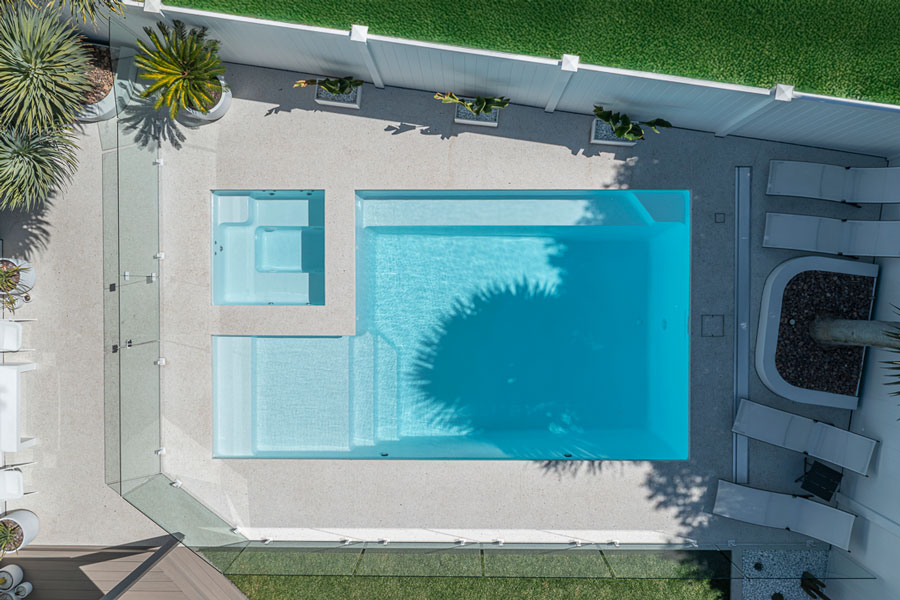
With a fibreglass pool, the finish decision comes down to one question: what colour do you want? The Fibreglass Pool Company offers 11 Sparkle colours, each integral to the gelcoat itself.
Lighter colours like Polo White Sparkle, Crystal Blue Sparkle, and Sapphire Blue Sparkle produce bright, tropical-looking water. Deeper tones like Skynight Sparkle and Mondo Grey Sparkle create a darker, more dramatic effect. Aqua Green Sparkle and Sandy Beach Sparkle sit in the middle ground, offering earthy warmth that suits natural landscaping.
Water colour shifts with light levels, time of day, shade, and surface movement, so real installed pool images are always a more reliable guide than swatches.
Browse all colours and compare them side by side using the interactive colour selector.
What Is the Best Finish for a Pool?
For anyone building a new pool, the answer is fibreglass gelcoat. It is built-in, non-porous, requires no resurfacing, and outlasts every applied concrete finish on a total cost- of-ownership basis.
For existing concrete pools that need attention, the right choice depends on budget, expected lifespan, and maintenance tolerance.
If you want… | Choose… |
Lowest maintenance and smooth feel | Fibreglass gelcoat: non-porous, smooth throughout its lifespan, no resurfacing required |
Best durability for a concrete pool | Pebblecrete or glass bead blend: hard-wearing surface with a 15–25 year lifespan |
Best value over time | Fibreglass gelcoat: strongest durability-to-cost ratio when you factor in the absence of resurfacing cycles |
Premium aesthetic | Full tile or glass bead blend for concrete pools; deep-tone gelcoat (Skynight, Mondo Grey) for fibreglass |
Best for families with children | Fibreglass gelcoat: smooth and gentle underfoot throughout the life of the pool |
Budget concrete resurfacing | Plaster: lowest upfront cost, though expect to resurface again within 7–12 years |
Frequently Asked Questions
What is the best finish for a pool?
For a new pool, fibreglass gelcoat is the best available finish. It is non-porous, smooth, requires no resurfacing, and is built into the shell of the pool rather than applied over it. For existing concrete pools that need resurfacing, quartz finishes offer the best balance of durability and cost; pebblecrete lasts longest; tile is the premium option.
Do fibreglass pools need resurfacing?
No, not in the way concrete pools do. The gelcoat is the pool surface and is built into the shell itself. If a gelcoat becomes faded or oxidised after many years, restoration, buffing, or a gelcoat recoat can restore it. This is a very different process to the regular resurfacing cycle that concrete pool owners need to plan for.
How much does it cost to resurface a concrete pool in Australia?
Costs vary widely depending on finish type, pool size, surface condition, access, and location. Plaster is the most affordable option; quartz sits in the middle; pebble, glass bead, and tile are at the premium end. Surface preparation quality is often where quotes differ most. Always confirm what prep work is included, what finish system is being applied, and what warranty is provided.
Is pool paint worth it?
As a long-term solution, no. Paint typically lasts 3–7 years and needs recoating regularly. Repeated layers can cause compatibility issues and limit future resurfacing options. It makes sense as a short-term fix when the budget is tight or when preparing a property for sale, but it is not a substitute for proper resurfacing.
How long does a fibreglass gelcoat last?
A quality gelcoat surface maintained with proper water chemistry can last 15–25 years or more. The Fibreglass Pool Company’s gelcoat is engineered for UV resistance, chemical resistance, and long-term gloss retention. Actual lifespan depends on water chemistry management and the quality of the original manufacture.
Are pebble pool finishes rough on feet?
Coarser pebblecrete finishes can be noticeably rough underfoot, which many families find uncomfortable once children are regularly using the pool. Glass bead blends are smoother, but still textured. A fibreglass gelcoat surface remains smooth throughout the life of the pool.
Can you change the colour of a fibreglass pool?
Colour is integral to the gelcoat in a fibreglass pool, so changing it requires a gelcoat recoat rather than a standard resurface. It is possible, but it is a more involved process. For new pool buyers, the colour is chosen once. The Fibreglass Pool Company offers 11 Sparkle colours.
What is the lowest maintenance pool finish available?
Fibreglass gelcoat. Its non-porous surface resists algae and staining more effectively than any applied concrete finish, requires less chemical management, and does not need periodic resurfacing. Among concrete options, quartz and glass bead finishes are the lowest maintenance, but they still require eventual replacement and more ongoing chemical intervention than gelcoat.