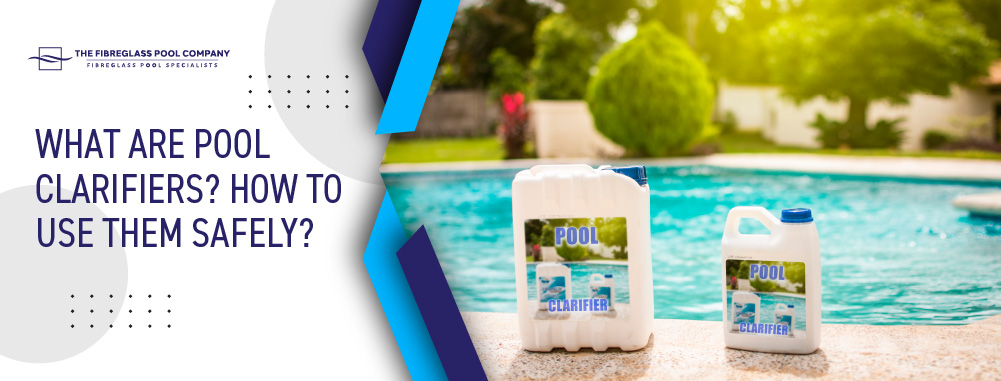
Pool clarifiers are liquid chemicals that grab onto tiny bits of debris in your pool – things like dust, sunscreen, oils and dead algae – and clump them together into larger particles. Once they’re bigger, your filter can actually catch them, which helps turn dull or cloudy water back to that “sparkly blue” look. Clarifiers don’t replace chlorine or your filter, they just help your existing system work more efficiently.
By the end of this article, you'll learn:
- Clarifiers bind tiny particles so your filter can remove them.
- Use only when water is cloudy—not as a weekly treatment.
- They're safe and work with most sanitizers.
- Follow dosage instructions and run the filter continuously.
- Unlike flocculants, clarifiers don’t require vacuuming.
What are pool clarifiers?
A pool clarifier is a water treatment chemical designed to clear cloudy pool water. It works by using special polymers to attract and bind together the tiny particles that are too small for your filter to grab on their own. These might be fine dust, cosmetic residues, body oils, dead algae or metal particles. Once a clarifier has clumped them into bigger “flocs”, your filter can remove them on the next few circulation cycles.
In everyday pool care, that means a clarifier:
- Improves water clarity and sparkle when the pool looks dull or slightly cloudy
- Helps your filter trap more fine debris instead of letting it pass straight through
- Supports your chlorine, rather than replacing it – it doesn’t sanitise, it just makes cleaning easier
Pool clarifiers are sometimes confused with flocculants. Both use similar chemistry to clump particles, but clarifiers are designed to keep those clumps suspended long enough to be filtered out, while flocculants usually sink everything to the bottom to be vacuumed to waste (more on that in the section below).
Pool clarifiers are chemicals used to help remove suspended particles from water. They are also known as flocculants, and they’re typically used in swimming pools, spas and hot tubs.
There are many different types of pool clarifiers available on the market today; some will clear your pool faster than others, but all work effectively at removing debris from the water column. Some of them come with additional features such as stabilisers or additives, which may improve the effectiveness even more than standard ones do.
When should pool clarifiers be used?
You should only add a pool clarifier when the water is clean but looks hazy, dull or slightly cloudy, even after you’ve checked the basics (chlorine, pH, filtration). It’s a polishing tool, not a weekly “must-use” chemical.
Common times to use a clarifier include:
- After heavy pool use (lots of swimmers, sunscreen, body oils) when the water loses its sparkle
- After a storm or windy day that’s blown fine dust and debris into the pool
- After you’ve killed algae with shock and the water is blue but still cloudy from dead algae particles
- At the start of the season when opening a pool that’s a bit hazy but not green.
Before you reach for a clarifier, it’s important to:
- Test and balance pH and alkalinity
- Make sure your filter is clean (backwash or clean cartridges)
- Run the pump long enough each day for proper circulation)
If those basics aren’t right, a clarifier will give disappointing results and can even make things worse if you overdose.
Pool clarifiers can be used to improve the clarity of your swimming pool water. Some factors that will determine whether or not you need a pool clarifier include:
- The clarity of your pool water – Your pool water’s clarity is measured by its transparency and lack of suspended particles. A cloudy or greenish appearance indicates an algae problem. Clear and blue-green colour indicates an excess amount of iron in the water (this often occurs when there’s no filter system).
- How often you use your pool, as well as the size of it – If you’re only using your swimming pool on weekends, then a clarifier won’t be necessary for most people. However, if you swim in your pool every day or multiple times a week then investing in a good quality clarifier might be worth it!


Benefits of pool clarifiers
The main benefit of using a pool clarifier is that it lets your filter do a better job. Instead of constantly recirculating microscopic particles that make the water look milky or dull, a clarifier brings them together into larger clumps the filter can remove.
In practical terms, a good clarifier can:
- Make slightly cloudy water look clear again within 24–48 hours (with proper filtration)
- Help you use less chlorine and shock over time by keeping water cleaner
- Reduce the amount of fine dust and dead algae that settles on steps and ledges
- Improve the overall look and feel of the water, especially in bright sunlight.
For fibreglass pools, clarifiers are especially useful because clear water really shows off the colour of the shell – any cloudiness is more noticeable. Using a clarifier occasionally, when needed, helps keep that “showroom finish” look.
Pool clarifiers are a great way to clean your pool water. They help to reduce algae growth and improve the clarity of your swimming pool. They can also help to keep the water balance in your pool by removing any unwanted particles from its surface, which keeps it balanced throughout the year.
Pool clarifiers are also good for preventing stains and rings around your swimming pool because they remove these chemicals from entering your swimming area. This means no more soap scum!
If you have a swimming pool, it’s important to keep it clean. Not only will this make the water look more appealing, but it will also prevent any unwanted bacteria from growing in your pool that could cause illness. There are many ways you can keep your swimming pool clean and balanced. One of the best ways is by using a pool clarifier.
Is it safe to use pool clarifiers?
Before we get into the details of how these clarifiers work, it’s important to understand that they are safe for use in pools.
- Clarifiers are safe for humans, animals and plants.
- They’re not toxic to humans or animals—the only ingredient that could cause harm is chlorine (which is also used in other products).
- The chemicals used in pool clarifiers don’t leach into groundwater or soil; they’re contained within the filter itself. So, there’s no risk of them being released into the environment at large once you’ve disposed of your old filter by recycling it properly.
How to use a clarifier in the pool?
Using a pool clarifier is simple, but timing and dosage matter:
- Check the water is balanced – test pH, alkalinity and chlorine, and correct if needed.
- Clean the filter – backwash sand/DE filters or hose off cartridge filters.
- Turn the pump on and keep it running.
- Measure the clarifier carefully according to the bottle (usually based on pool volume).
- Pour it slowly around the pool edges or into the return stream to help distribution.
- Run the filter continuously for 24–48 hours so the filter can trap the clumped particles.
- Backwash or clean the filter again once the water has cleared, as it will be holding more fine debris than usual.
You don’t need to drain the pool or vacuum to waste when using a clarifier – that’s the main difference compared to flocculants.
Pool Clarifiers are products that help to remove organic matter from the pool water. The organic matter can be in the form of algae, bacteria, dead plants and animals. These products are usually used to treat cloudy pool water by removing these unwanted substances from your swimming pool filtration system.
There are many different types of clarifiers available on the market today, but the two most popular ones are mechanical filter media and chemical filter media.
Pool clarifiers are very easy to use. The basic instructions are you simply add the product into your pool, let it circulate for 24 hours, and then drain out the water using a filter pump. That’s all there is to it.


Pool flocculants or clarifiers?
Pool flocculants are chemicals used to improve the quality of your swimming pool’s water. However, you might think that since the clarifiers do the same job, both these are the same. The truth is that there are a lot of differences between these two. Clarifiers are used to remove floating particles from the pool water, while flocculants are used to remove suspended particles. They both use polymers, but they have different properties:
- Clarifiers remove larger debris (1-5 mm), while flocculants work better on smaller debris (0.5-1 mm).
- Clarifiers work well in salt water because they can’t be washed away by high levels of chlorinated or brominated compounds like many other types of flocculants. Also, there is another issue with flocculants. Repeated use of flocculants in salt water is not recommended because these chemicals can cause staining on concrete surfaces where you’re using them. This means that if you want your swimming pool clean without worrying about how dirty it gets after every swim session, a clarifier is a must!
Conclusion
Pool clarifiers are chemical agents that can be added to pools to help reduce the amount of chlorine required to maintain good water quality. They work by removing organic particles from the water column, which can cause algae growth in the pool (or other people’s eyes!). Your swimming pool is an expensive investment. Apart from the initial installation costs, you also have to pay for maintenance costs. So, you want your swimming pool to be in the best shape possible, and a pool clarifier can help you with that.
If you want to use a pool clarifier, you need to choose one that’s safe for your needs. It should also have been properly tested by an independent laboratory before being sold on store shelves. You should always consult manufacturer instructions when using any product like this. This way, everyone knows exactly what steps need to be taken before starting up their swimming program again! If you still aren’t sure, reach out to our friendly team who would be happy to help answer any questions you have!
Frequently asked questions about pool clarifiers
When should I put clarifier in my pool?
You should only add a pool clarifier when your water is clean but looks hazy, dull or slightly cloudy, even after you’ve checked the basics like chlorine, pH and filtration. Clarifier is a “polishing” product, not something you need to add every week. It’s ideal after heavy use, storms, or once you’ve killed algae and the water is blue again but still a bit cloudy from dead particles.
Before you reach for clarifier, always test and balance the water, clean or backwash your filter, and run the pump for long enough each day. If those fundamentals aren’t right, a clarifier will give disappointing results and can even make things worse if you overdose.
What does a clarifier do for a pool?
What is the fastest way to clear up a cloudy pool?
Is baking soda a clarifier for pools?