
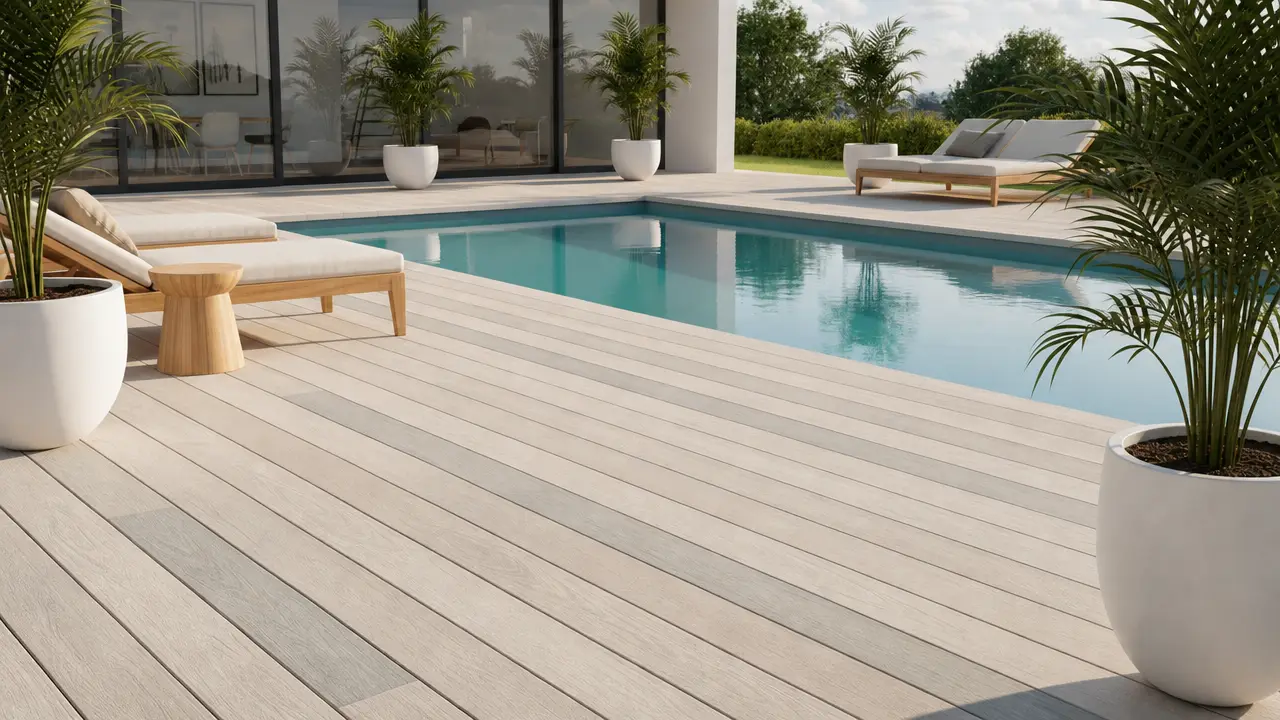
Once you’ve chosen your pool range and colour, the next big decision is what goes around it. Coping and paving don’t just finish off the look of your pool area – in a warmer climate, they play a real functional role too, affecting everything from how hot the surface gets underfoot to how well it copes with humidity and pool splash-out. Here’s what to think about when choosing tiles, coping, and paving for your backyard.
Coping is the edging that sits directly around the pool’s perimeter, where the pool shell meets the surrounding paving. It serves a few purposes: it provides a clean visual transition, protects the edge of the pool shell, and – importantly – gives swimmers a comfortable, non-slip surface to grip when entering and exiting the pool.
Because coping is the area most consistently exposed to both pool water and direct sun, the material you choose here matters more than almost anywhere else around the pool.
Travertine A popular natural stone choice that stays noticeably cooler underfoot than many alternatives – a genuine advantage during hot summers when pool decks can otherwise become uncomfortably hot by midday. Travertine’s naturally textured surface also provides good slip resistance, even when wet.
Porcelain Pavers Increasingly popular for pool surrounds thanks to their durability, low porosity (meaning less moisture absorption – useful in humid climates), and wide range of finishes that can mimic natural stone or timber. Look for pavers specifically rated for outdoor/pool use with an appropriate slip rating.
Concrete Pavers A cost-effective option available in a huge range of colours and finishes. Concrete can get hotter underfoot than travertine or porcelain in direct sun, so lighter colours are generally a better choice for pool surrounds than darker tones.
Timber-Look Composite Decking A popular choice for a more relaxed, tropical aesthetic. Composite decking resists the rot and termite issues that can affect timber in humid climates, while still giving that natural look – though it’s worth checking how the specific product performs underfoot temperature-wise in direct sun.

Your pool shell colour and your surrounding paving work together visually – and getting the pairing right makes a noticeable difference to the finished look. Lighter pool colours, like our Silver Pearl Sparkle or Polo White Sparkle finishes, tend to pair beautifully with warmer-toned travertine or sand-coloured pavers, creating a tropical, resort-style feel that suits Australia’s brighter daylight
Darker pool colours create a more dramatic, reflective water surface, and often pair well with lighter-toned surrounding paving for contrast – helping the pool become a visual feature rather than blending into the backdrop.
If you’re working through colour options, our Pool Colours page is a good place to compare finishes before settling on your surrounding materials.


In a climate where pool decks are wet far more often than not – and where bare feet are the norm for much of the year – slip resistance isn’t a “nice to have,” it’s essential. Look for materials with an appropriate slip rating for wet pool surrounds (your pool builder or supplier can advise on the relevant Australian Standard rating for your chosen material), particularly around the coping itself and any steps or entry points.
This is one area where conditions differ meaningfully from state to state. Dark-coloured concrete or stone surfaces can become genuinely too hot to walk on barefoot during summer afternoons. If your pool area gets significant direct sun, prioritising lighter colours and naturally cooler materials like travertine – particularly in the areas immediately around the pool edge – makes a real difference to how usable the space feels day-to-day.

Travertine and porcelain pavers are popular choices because they stay cooler underfoot than darker concrete and offer good slip resistance – both genuinely useful properties in Australia’s heat and humidity.
Yes, significantly. Darker colours absorb more heat and can become uncomfortably hot underfoot in direct sun, while lighter colours stay considerably cooler.
Lighter pool shell colours generally pair well with warmer-toned paving for a bright, resort-style look, while darker pool colours often look striking against lighter surrounding paving for contrast.
It can be – composite decking resists the rot and termite issues that affect timber in humid climates while giving a similar tropical aesthetic. It’s worth checking the specific product’s underfoot temperature performance in direct sun before committing.
Yes – slip resistance around pool coping, steps, and entry points is an important safety consideration, particularly given how often these areas are wet. Ask your supplier about the slip rating for any material you’re considering.
Want to see how different finishes look with our pool ranges and colours? Visit our Brisbane display centre or get in touch for guidance.